The oil and gas industry has always been crucial for powering industries, transportation, and economic growth. In the early years of the industry, especially between the 1900s and 1970s, operations relied heavily on manual labor and basic mechanical equipment. Major companies such as Standard Oil, Royal Dutch Shell, and BP operated with limited monitoring technology compared to today.
During this period, engineers had to physically inspect pipelines, pumps, and processing equipment to detect leaks or mechanical faults. Technicians manually read pressure gauges and temperature meters during routine inspections. These inspections were not continuous, so problems were sometimes discovered late, which could lead to accidents or equipment failure.
Drilling operations in the 1940s to 1970s were also mostly vertical. Companies relied heavily on geological predictions to locate oil reservoirs. If the well missed the target, another well had to be drilled, increasing both cost and time. Oilfield service companies such as Schlumberger and Halliburton began introducing better logging tools during this time, but the technology was still limited compared to modern standards.
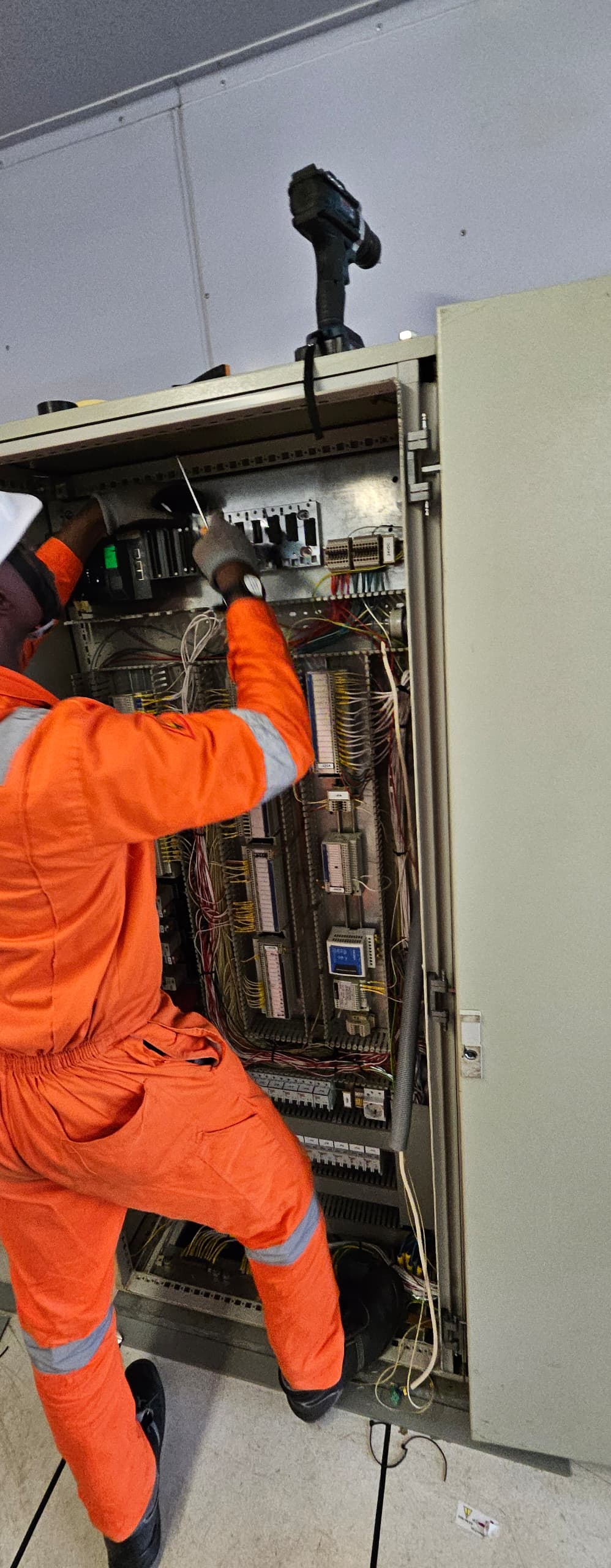
Today, the industry has changed significantly. Modern oil and gas facilities use digital monitoring systems, smart sensors, and automated control technologies that continuously measure pressure, temperature, vibration, and flow rates in real time. Engineers can monitor these systems from centralized control rooms and receive immediate alerts if abnormal conditions occur.
Drilling technology has also advanced through directional and horizontal drilling, allowing operators to precisely reach reservoirs that were once difficult to access. Companies like ExxonMobil and Chevron now use advanced drilling and data technologies to increase production while reducing environmental impact.
Maintenance practices have also improved. Instead of waiting for equipment to fail, modern facilities use predictive maintenance systems that analyze equipment data to detect potential problems before they occur. This reduces downtime, improves safety, and saves operational costs.
In summary, the oil and gas industry has significantly transformed from traditional manual methods to advanced technology-driven operations. While older methods laid the foundation for the industry, modern technologies have made operations safer, more efficient, and more environmentally responsible.